REFINE PROJECT

REFINE is a collaboration between 4 European and 2 Australian partners that aims to enhance treatments for mosquito-borne orthoflavivirus infections by identifying new targets for antibodies, inhibitors, and vaccines. In addition, we will develop a platform to test the safety and effectiveness of these treatments before clinical trials.

The continuous spread and the intensifying outbreaks of mosquito-borne orthoflaviviruses are becoming a growing global concern. These viruses, including dengue, Zika, and yellow fever, cause severe diseases and can trigger widespread epidemics, with dengue alone infecting over 400 million people annually. Factors such as climate change, globalization, and the proliferation of invasive mosquito species have contributed to the worldwide dissemination of these pathogens. In Europe, the range of Aedes mosquitoes, vectors for some of these viruses, is expanding by approximately 100 km per year. Recently, Europe has witnessed an upsurge in cases of West Nile virus (WNV) and Usutu virus (USUV) infection, both transmitted by Culex mosquitoes. In 2024, the largest geographical distribution of WNV in Europe in a single year was observed, with 1436 human cases of WNV infection, with 91%  of cases hospitalized and 9% case fatality rate.

Stay updated with the latest news

We will publish our news here soon, so stay tuned.
September 10, 2026

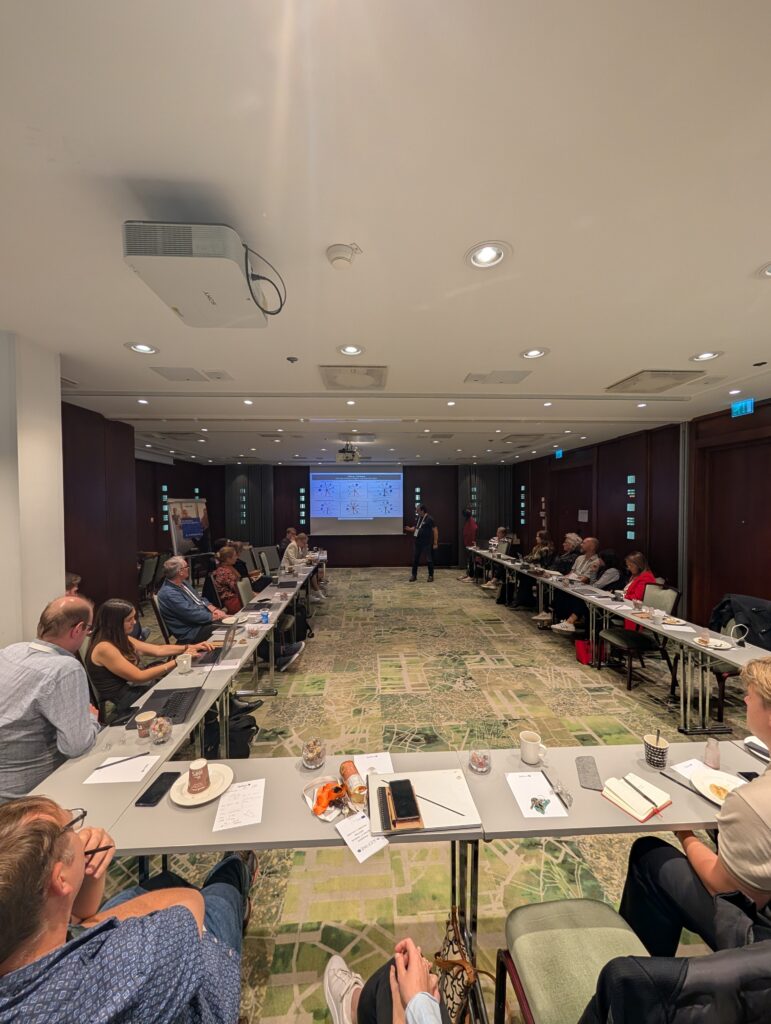
REFINE consortium meets in Helsinki for annual General Assembly

The REFINE consortium held its annual General Assembly in Helsinki from 3–4 September 2026, bringing partners together to review progress, discuss scientific updates, and plan the next phase of the project.

The meeting provided an important opportunity to share results from across the work packages and reflect on how the different activities contribute to REFINE’s overall objectives. Discussions focused on virus selection and characterisation, in vitro model development, receptor and entry-pathway studies, clinical relevance, intervention strategies, dissemination and project management.

A key theme of the meeting was the value of in-person collaboration. The discussions helped connect different studies and perspectives into a coherent scientific story and supported alignment for the next phase of the project.

The consortium was also pleased to welcome its new partner joining through the Hop-On scheme: the Bioinformatics Department at The Cyprus Institute of Neurology and Genetics. Their expertise will strengthen REFINE’s computational and integrative approaches, including work on virus-host interaction data.

The meeting concluded with a shared focus on priorities for the coming year, including upcoming deliverables, milestones, and continued development of REFINE’s models, tools, and intervention strategies.

Many thanks to all REFINE partners who contributed to the meeting and travelled to Helsinki.

REFINE — Receptor-Focused Interventions Against Orthoflavivirus Neuroinvasion and Entry — is funded by the European Union’s Horizon Europe research and innovation programme under Grant Agreement No. 101191791.

April 30, 2026

REFINE welcomes The Cyprus Institute of Neurology & Genetics as a new Hop-On partner

REFINE welcomes The Cyprus Institute of Neurology & Genetics (CING) as a new consortium partner through the Horizon Europe Hop-On Facility.

CING joined REFINE on 1 April 2026 and will lead a newly added work package: WP10 – Computational Integration for Virus-Host Targeting and Therapeutic Discovery. This new work package will strengthen REFINE’s capacity to integrate experimental and computational approaches to identify new therapeutic strategies against orthoflaviviruses.

Within REFINE, CING will provide expertise in host-pathogen interaction networks, computational modelling, and graph-based prediction of drug synergies. These contributions will support virus-host target identification and guide experimental validation across the consortium. WP10 will collaborate closely with existing scientific work packages, ensuring effective feedback between data generation, computational analysis, and laboratory validation.

CING also brings strong expertise in molecular virology and West Nile virus research in Cyprus. Its participation will broaden REFINE’s geographical scope and further strengthen the consortium’s ability to address orthoflavivirus infections from complementary scientific and regional perspectives.

The inclusion of CING through the Hop-On Facility adds new expertise, infrastructure and research capacity to REFINE. It will enhance the project’s integrative approach and support its overall ambition to develop receptor-focused interventions against orthoflavivirus neuroinvasion and entry.

Publications

We will publish our publications here soon, so stay tuned.

PUBLICATION 2

February 5, 2025

Lorem ipsum dolor sit amet, consectetur adipiscing elit, sed do eiusmod tempor incididunt ut labore et dolore magna aliqua.

PUBLICATION 1

February 5, 2025

Lorem ipsum dolor sit amet, consectetur adipiscing elit, sed do eiusmod tempor incididunt ut labore et dolore magna aliqua.